
Why Your IT Team Needs Observability, Not Just Monitoring
Your application is running.
Your servers are online.
Your dashboards are showing green.
And yet, customers are complaining that the application is slow.
So what went wrong?
This is where traditional monitoring can reach its limits.
Modern applications rarely depend on a single server or database. They run across cloud infrastructure, APIs, containers, microservices, third-party services and distributed systems.
When something breaks, knowing that something is wrong isn't always enough.
Your IT team needs to understand why.
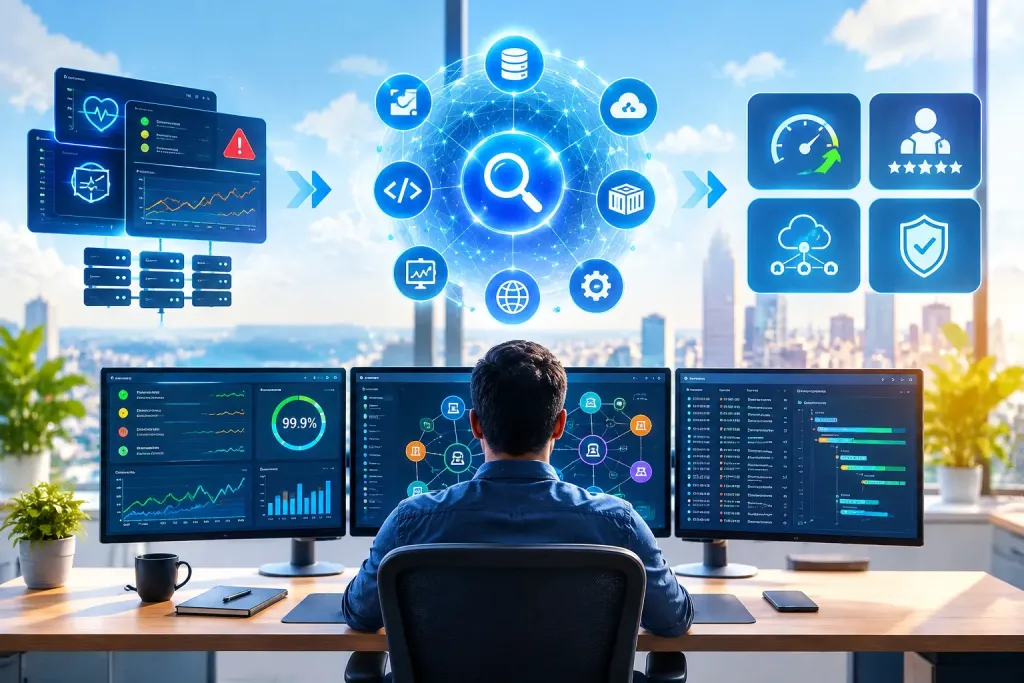
Monitoring Tells You Something Is Wrong. Observability Helps Explain Why.
Traditional monitoring typically tracks predefined metrics such as:
- CPU and memory usage
- Server availability
- Response times
- Error rates
- Network performance
This is valuable for detecting known problems.
Observability goes deeper.
It combines signals such as logs, metrics and traces to help IT teams understand what is happening inside complex systems and investigate unexpected problems.
“The checkout service is experiencing high latency.”
“The checkout request is slowing down because an API call is waiting on a database query in another service.”
That difference can dramatically reduce troubleshooting time.
Why Traditional Monitoring Is Becoming Less Enough
IT environments are becoming more distributed. A single customer transaction may pass through several services before the final result reaches the user. That creates a problem for IT teams:More components mean more possible points of failure.
A service may appear healthy while another dependency is creating the actual problem. Observability helps teams connect these signals and follow the path of a request across the technology stack. Instead of looking at isolated dashboards, teams gain a more complete picture of system behaviour.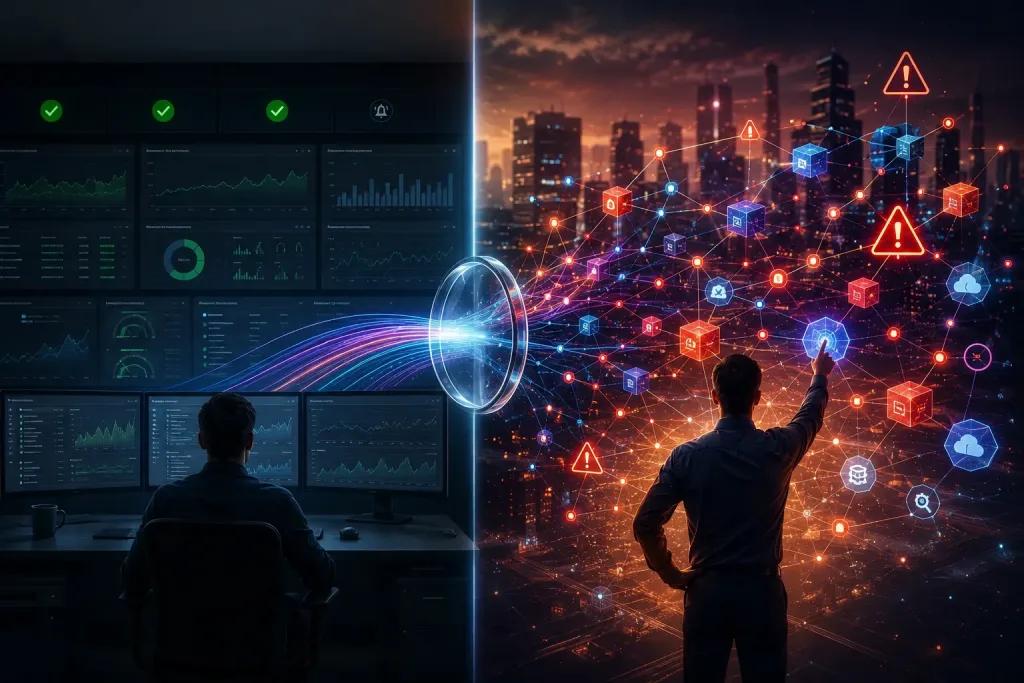
4 Reasons Businesses Need Observability
Imagine an AI agent that can access your CRM, email, customer database and internal documents.
It may be incredibly useful.
1. Faster Troubleshooting
When an incident occurs, every minute matters. Observability helps teams move from “something is broken” to “this is what caused it” faster. That can reduce the time required to identify and resolve incidents.
2. Better Application Performance
Users don't care whether your server CPU is at 40%. They care whether your application loads quickly and works properly. Observability connects infrastructure behaviour with application and user experience, helping teams identify performance bottlenecks.
3. Greater Visibility Across Complex Infrastructure
Modern businesses may operate across cloud platforms, on-premise systems, APIs, containers and third-party services. Observability provides a way to understand how these components interact rather than examining each one in isolation.
4. More Reliable IT Operations
The goal isn't simply to react to outages. By analysing recurring patterns and system behaviour, IT teams can identify weaknesses before they become major incidents. That shifts IT from reactive troubleshooting toward proactive reliability.
Monitoring vs Observability: What's the Difference?
The two aren't competitors.
Monitoring is still essential.
Observability builds on it.
How Should Businesses Start With Observability?
The better objective is:
“Let AI do the right things within clearly defined boundaries.”
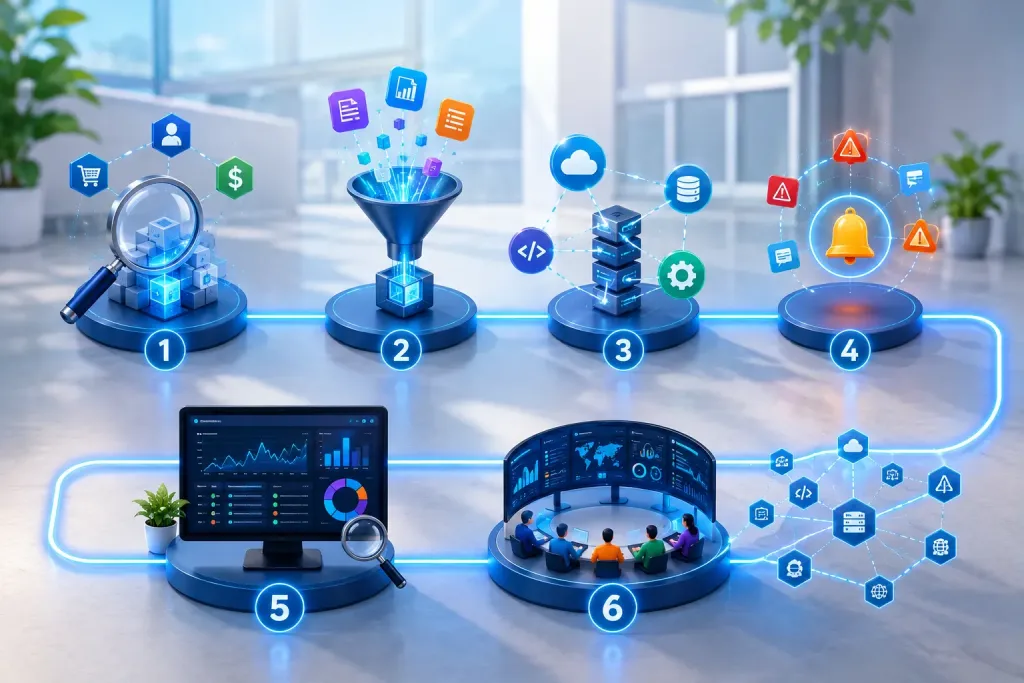
- 1. Identify critical systemsStart with applications and services that directly affect customers or revenue.
- 2. Collect the right signalsBring together relevant logs, metrics and traces.
- 3. Connect infrastructure and application dataUnderstand how different components influence one another.
- 4. Define meaningful alertsAvoid overwhelming teams with notifications that don't require action.
- 5. Analyse recurring incidentsUse historical data to identify patterns and prevent repeat failures.
- 6. Expand graduallyOnce observability proves its value in critical systems, extend it across the wider environment.
The real value
The Real Value of Observability Isn’t More Data
It’s better understanding.
Collecting thousands of metrics doesn’t automatically make an IT environment observable.
The real objective is to give teams the context they need to answer critical questions:
What happened? Where did it happen? Why did it happen? Who or what was affected? And how can we prevent it from happening again?
That’s why observability is becoming increasingly important for modern IT teams.
Monitoring tells you when to look. Observability helps you understand what you're looking at.
As applications and infrastructure become more distributed, businesses cannot afford to rely solely on disconnected monitoring dashboards.
The organisations that build strong observability practices can troubleshoot faster, improve reliability and deliver a more consistent digital experience.
For Nispaara, the message is simple:
Better visibility leads to better IT decisions.
Frequently Asked Questions
What is observability in IT?
IT observability is the ability to understand the internal state and behaviour of applications and infrastructure by analysing telemetry such as logs, metrics and traces.
What is the difference between monitoring and observability?
Monitoring primarily detects known problems through predefined metrics and alerts. Observability provides deeper context that helps teams investigate why a system is behaving unexpectedly.
Why is observability important for modern applications?
Modern applications often depend on multiple services, APIs, databases, cloud resources and infrastructure components. Observability helps IT teams understand how these components interact and identify the root cause of problems.
Does observability replace monitoring?
No. Monitoring remains an important part of IT operations. Observability complements monitoring by providing deeper context for investigating and diagnosing issues.
What are the three pillars of observability?
The commonly recognised pillars are logs, metrics and traces. Together, they provide different perspectives on application and system behaviour.
Is observability only useful for large enterprises?
No. Smaller businesses can also benefit from observability, particularly when their applications rely on cloud infrastructure, APIs, distributed services or other interconnected systems.