
Software Supply Chain Attacks: The Hidden Threat Inside Your Technology Stack
Your company may have a strong firewall, secure servers and carefully protected applications. But what about the software inside those applications?
Trust is the new perimeter.
Modern software rarely consists entirely of code written by your own developers. Applications depend on open-source libraries, third-party packages, APIs, cloud services, development tools and external vendors.
That creates a less visible attack surface: Your software supply chain.
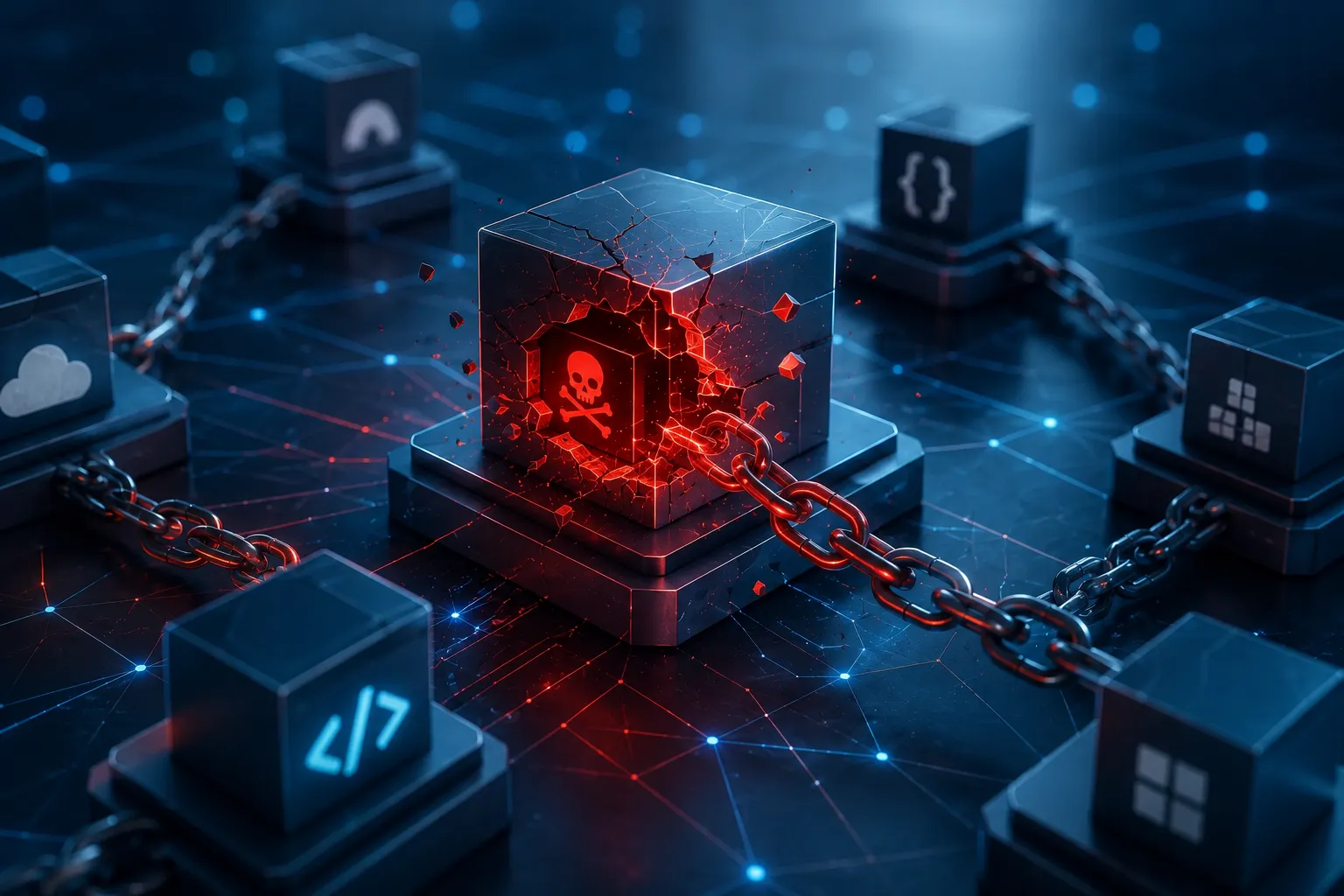
What Is a Software Supply Chain Attack?
A software supply chain attack occurs when attackers compromise a trusted component, supplier, development process or software dependency and use that access to affect downstream organisations.
Think of it like this:
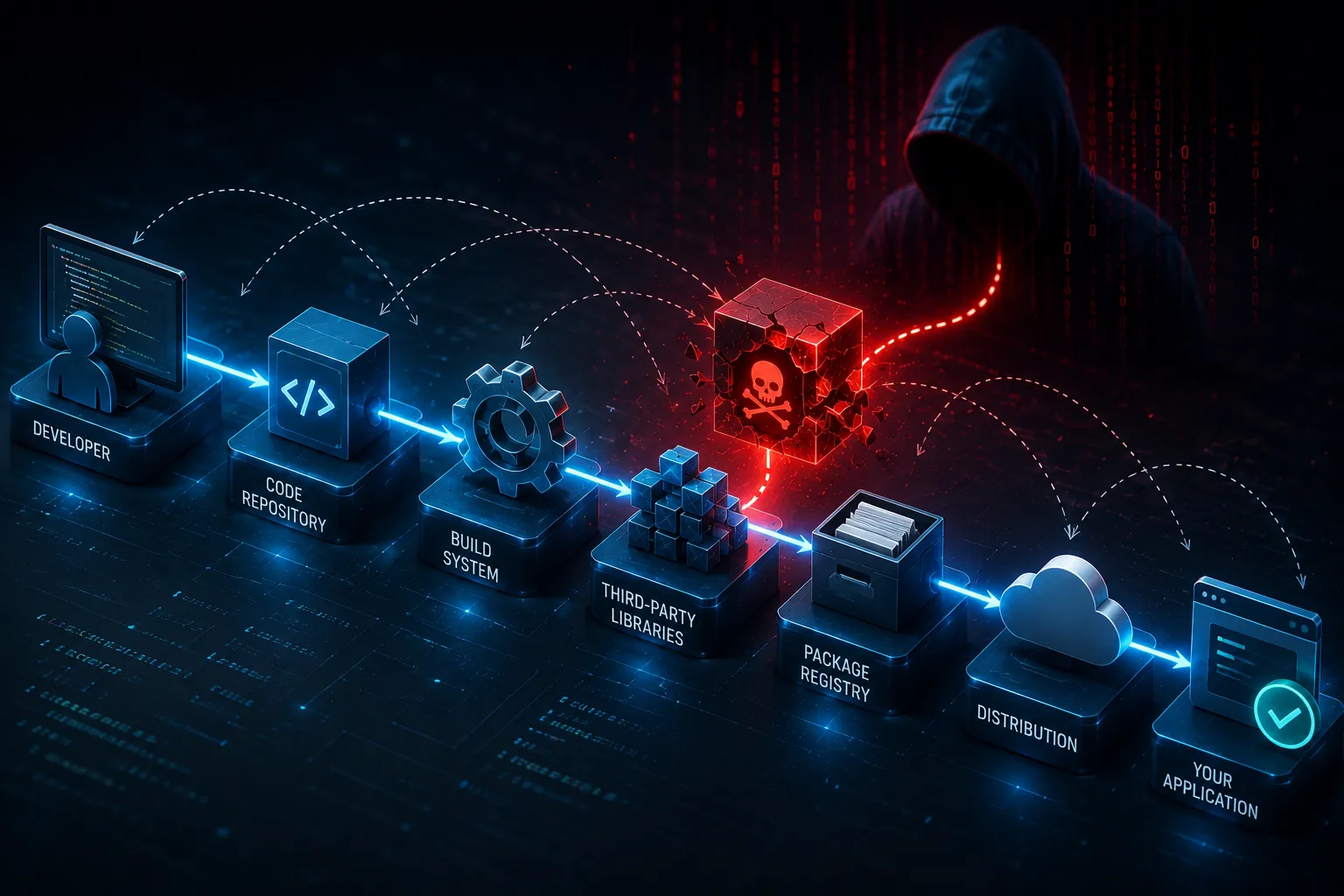
The risk isn't limited to proprietary software. Open-source components are widely used, and NIST recommends organisations establish controls around their provenance, integrity, maintenance and security.
Why Is the Risk Growing?
Modern applications can contain hundreds or thousands of dependencies.
A developer may install a package to solve a small problem. That package may depend on another package, which may depend on another.
The result is a technology chain that can extend far beyond what an organisation directly manages.
“Where is that vulnerable component being used?”
Without visibility, even identifying the affected systems can become a challenge.
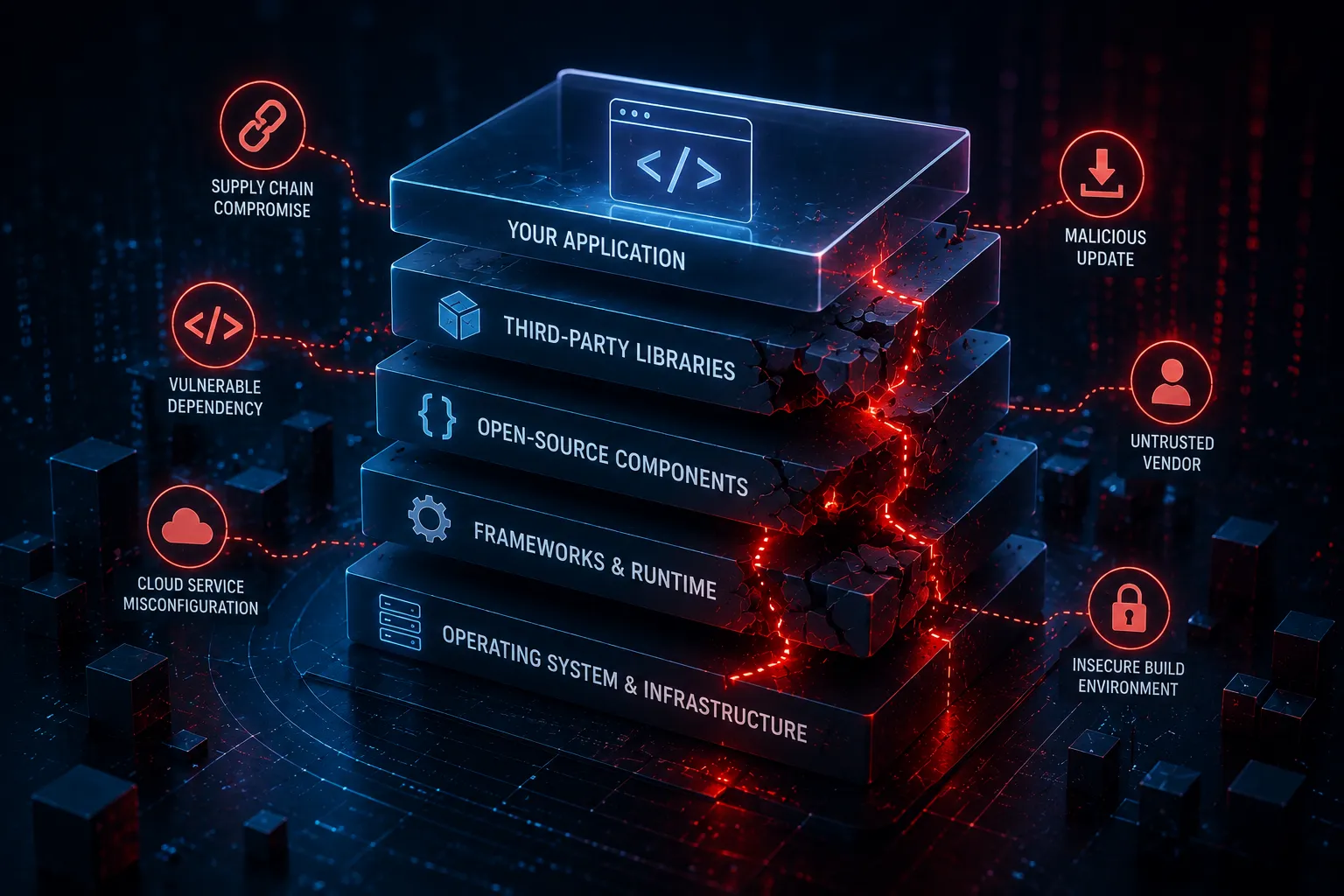
The Hidden Weak Points in Your Technology Stack
A software supply chain can include far more than your application code.
Open-Source Libraries
Popular frameworks and packages can become attractive targets because a single compromised component may affect many organisations.
Third-Party Vendors
A trusted software provider can introduce security risks into your environment through its products, updates or integrations.
Development Tools
Compromising build systems, repositories or development environments can allow malicious code to enter legitimate software.
Software Updates
Even an apparently legitimate update can become dangerous if the delivery process or source has been compromised.
Dependencies
Your application may depend on components your security team doesn’t even know exist.
Why an SBOM Matters
One important tool for improving visibility is a Software Bill of Materials (SBOM).
Think of an SBOM as an ingredient list for software. It records the components and relationships that make up a software product, helping organisations understand what they are running and respond faster when vulnerabilities are discovered.
But having an SBOM alone isn't enough.
NIST describes SBOMs as a way to improve software transparency and accelerate vulnerability identification and remediation.
CISA similarly describes SBOMs as an important building block for software supply-chain risk management.
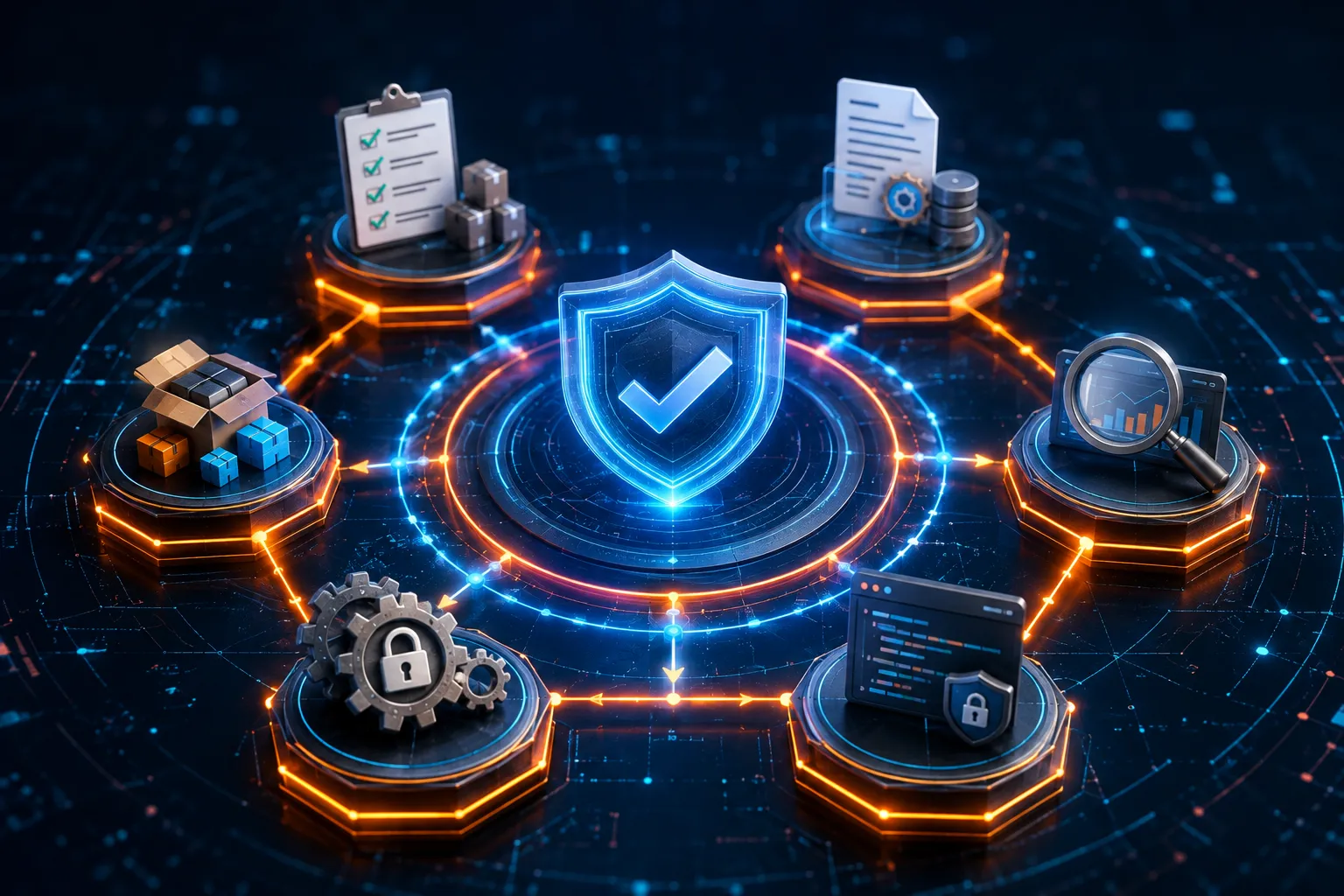
How Businesses Can Reduce Software Supply Chain Risk
You don't need to eliminate every third-party component. You need to manage what you depend on.
Know What You’re Using
Maintain an inventory of software, dependencies, vendors and open-source components.
Use SBOMs
Request and maintain machine-readable SBOMs where appropriate so your teams can understand software composition and exposure.
Assess Vendors
Security shouldn’t stop at your organisation’s boundary. Evaluate the security practices of critical software suppliers.
Monitor Vulnerabilities
Don’t wait for an incident. Continuously monitor components for newly discovered vulnerabilities and prioritise remediation based on actual business risk.
Secure the Development Pipeline
Protect source-code repositories, build systems, CI/CD pipelines, credentials and software release processes.
Control Open-Source Usage
Create processes for approving, monitoring and updating critical open-source dependencies.

The Biggest Mistake? Assuming Trusted Software Is Automatically Safe
A software vendor can be trusted. An open-source project can be widely used. A software update can be legitimate. And yet, any of these can become part of an attack chain.
That's why modern cybersecurity needs to move beyond:
“Is our network secure?”
and start asking:
“Can we trust everything that enters our technology environment?”
Frequently Asked Questions
What is a software supply chain attack?
A software supply chain attack occurs when attackers compromise a software component, vendor, dependency or development process and use it to affect organisations that rely on it.
Why are software supply chain attacks dangerous?
They can exploit trusted relationships. Instead of attacking a company directly, attackers may compromise software or dependencies already trusted and used within the organisation.
What is an SBOM?
A Software Bill of Materials is an inventory of the components and dependencies that make up a software product. It helps organisations understand what their software contains and identify affected components when vulnerabilities emerge.
Can open-source software create security risks?
Yes. Open-source software provides major development benefits but can introduce risks related to vulnerabilities, outdated components, provenance and maintenance. Organisations should establish controls for managing open-source dependencies.
How can companies prevent software supply chain attacks?
Companies can reduce risk through software inventories, SBOMs, vendor assessments, dependency monitoring, secure development practices, vulnerability management and stronger controls around build and deployment environments.
Is an SBOM enough to protect against supply chain attacks?
No. An SBOM improves visibility, but organisations must also monitor vulnerabilities, assess risk, verify software integrity and take action when problematic components are identified.
You can't secure what you can't see.
Your technology stack is more than the software your team builds. It's everything that software depends on.
And sometimes, the weakest link isn't your code—it's something your code trusts.
Nispaara Solutions can help businesses assess their technology environments, strengthen software security practices and build more resilient IT infrastructure.