
Your Website Isn’t Built for AI Search
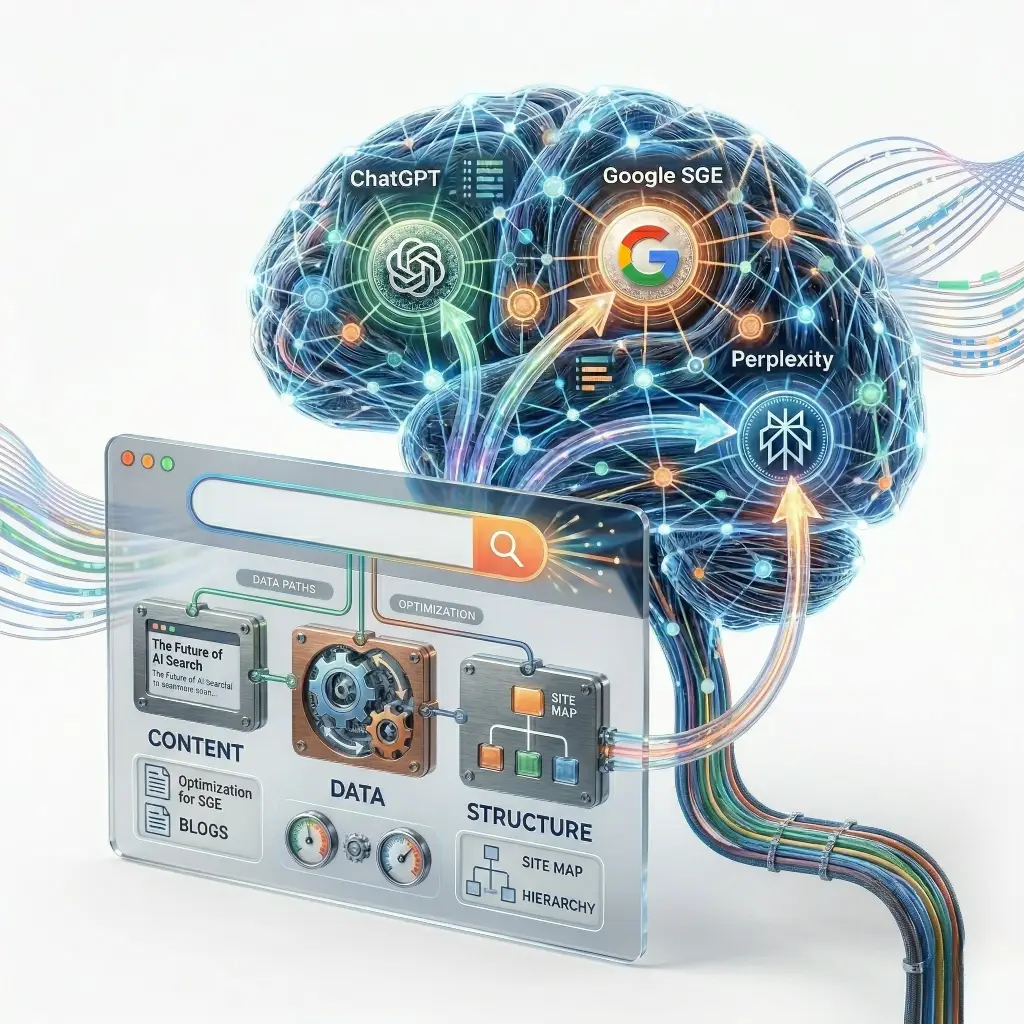

Search Has Changed — Quietly, But Completely
Users Aren’t Browsing Anymore
They’re getting direct answers from tools like ChatGPT, Google SGE, and Perplexity AI.
These Platforms Don’t List Options
They select, combine, and recommend based on authority and structure.
If Your Site Isn’t Selected, It Doesn’t Exist
Visibility in AI search is now determined by trust and clarity, not just keywords.
From Search Engine to Answer Engine
Traditional SEO
- → Focus: Rank higher on search pages
- → Method: Keyword-driven optimization
- → Goal: Get clicks from search results
Generative Engine Optimization
- → Focus: Become the answer AI trusts
- → Method: Context-driven, structured content
- → Goal: Be referenced in AI-generated answers
The shift is simple: From visibility → to credibility | From traffic → to trust
What is Generative Engine Optimization (GEO)?
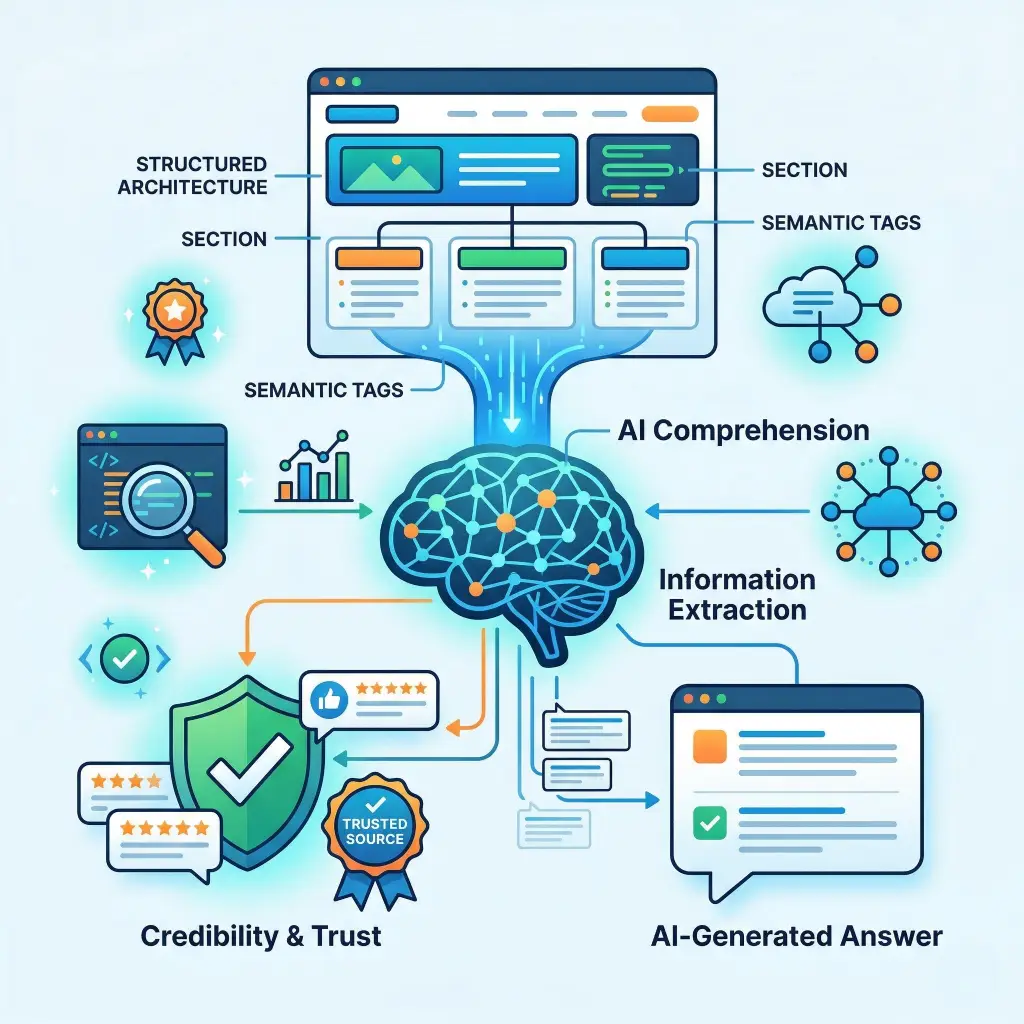
Easy for AI to Understand
Clear structure and semantics that AI systems can interpret
Structured for Information Extraction
Content organized for AI to extract and use in answers
Credible Enough to Be Referenced
Build authority signals that AI recognizes and trusts
Why Most Websites Are Already Falling Behind
❌Common Mistakes
- • Focus heavily on design over substance
- • Lack depth in content coverage
- • Don’t structure information clearly
- • Treat content as an add-on, not an asset
✓What AI Requires
- • Deep, structured content
- • Clear hierarchy and organization
- • Topical authority and expertise
- • Direct answers to real questions
To AI systems, visually impressive websites without substance send a clear signal: “This is not a reliable source.”
How AI Actually Chooses Which Websites to Recommend
Topical Authority
Content Structure
Clarity Over Cleverness
Trust Signals
Contextual Relevance
The GEO Readiness Framework
If you want your website to be picked by AI, it needs these five essentials:
Structured Content
Organized, scannable, easy to interpret. Use clear hierarchies, headers, and logical flow.
Depth of Coverage
Go beyond surface-level blogs. Build comprehensive topic ecosystems that demonstrate expertise.
Clear Answers
Solve real questions directly. Don’t bury the lead—answer immediately and expand from there.
Interconnected Pages
Build topic relationships through strategic internal linking. Create a knowledge network.
Technical Clarity
Fast loading, accessible design, clean HTML. Technical optimization signals trustworthiness.
Where Most Businesses Go Wrong
❌Common Mistakes
- ✕ Investing in SEO without fixing website structure
- ✕ Publishing blogs without a clear strategy
- ✕ Treating content as marketing instead of an asset
- ✕ Ignoring how AI reads and understands content
✓The Result
- → No visibility in AI search platforms
- → Low-quality traffic from search
- → Missed opportunities for leads
- → Falling behind competitors
What a GEO-Ready Website Actually Looks Like
Builds Authority Across Topics
Deep coverage of connected topics that establish expertise
Answers Real User Questions
Content directly addresses what your audience is searching for
Structured for Extraction
Clear organization that makes it easy for AI to pull information
Connects Content Meaningfully
Internal linking strategy that shows topic relationships
Converts Attention into Leads
Strategic CTAs and conversion paths that capture value
Actually Works
Delivers real business results, not just traffic
What This Means for Your Business
If your website is not appearing in AI-generated answers, attracting qualified enquiries, or building authority in your space, then it’s already underperforming.
And this gap will only grow.
Growing Visibility Gap
Lost Authority
Urgent Action Required
A Practical Way to Start
You don’t need to rebuild everything overnight. Start with these steps:
Structure Your Content
Identify Key Topics
Build Depth
Connect Strategically
Small shifts—done right—create strong visibility.
How We Approach This at Nispaara
Discoverable
Visible in both search engines and AI platforms
Structured
Built for AI understanding and extraction
Authority-Driven
Demonstrating expertise and trust signals
Conversion-Ready
Strategic CTAs that turn visitors into clients
Ready to Get Started?
Let us audit your website and identify visibility gaps in AI search.
Frequently Asked Questions
Q: What is Generative Engine Optimization (GEO)?
Q: How is GEO different from traditional SEO?
Q: Why is my website not showing in AI search results?
Q: Can SEO alone help me rank in AI tools like ChatGPT or Perplexity?
Q: What kind of content works best for GEO?
Q: How long does it take to see results from GEO?
Q: Do I need to redesign my website for GEO?
Q: Is GEO relevant for small and medium businesses?
Final Thought
Search is no longer about being found. It’s about being chosen.
And the businesses that understand this early will have a clear advantage.