
The New Cybersecurity Perimeter: Why Identity Matters More Than Firewalls
As businesses become more cloud-connected, remote and AI-enabled, controlling identity and access will become even more critical.
For years, businesses thought about cybersecurity in terms of a simple boundary:
Inside the network = trusted.
Outside the network = dangerous.
Firewalls protected the boundary. VPNs controlled remote access. Antivirus protected devices.
But today’s IT environment looks very different.
Employees work remotely. Businesses use cloud platforms and third-party applications. Customers access digital services from anywhere. Websites connect to multiple systems. And increasingly, AI tools and AI agents can access business data and applications.
The old perimeter is disappearing.
The new perimeter is identity.
NIST’s Zero Trust guidance reflects this shift, moving security away from static network boundaries and toward users, devices, applications and resources.
Why Firewalls Alone Are No Longer Enough
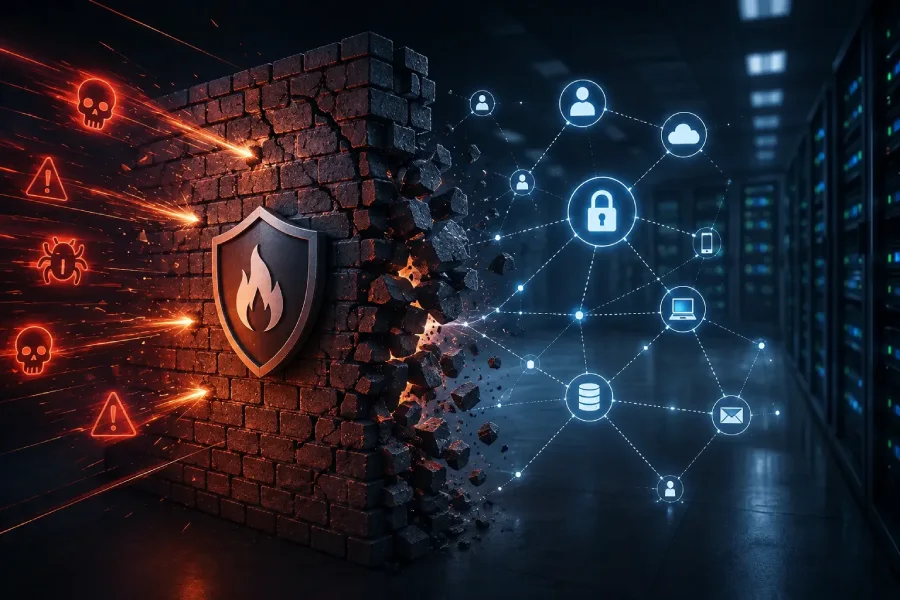
A firewall can control network traffic. But it cannot answer every important question:
- Is this really the employee they claim to be?
- Should this person have access to this application?
- Does the device meet security requirements?
- Should access continue after the user’s risk changes?
- Is a third-party account still authorised?
- Should an AI system be allowed to access the same information as an employee?
This is why modern security increasingly combines network controls with identity, authentication, authorization and continuous access decisions.
NIST’s implementation guidance specifically highlights identity governance, access and credential management, MFA, least privilege and continuous access evaluation as important components of Zero Trust architecture.
Identity Is Becoming the Security Control

Consider a simple example.
An employee logs into a company’s internal application.
Traditional security might ask:
“Are they connecting from an approved network?”
Modern security asks much more:
“Who are they, what are they using, what are they trying to access, and should they be allowed to do it right now?”
That difference is fundamental.
Identity security brings together controls such as:
The objective is simple:
Give the right identity the right access to the right resource at the right time.
The AI Factor: Your New “Users” May Not Be Human
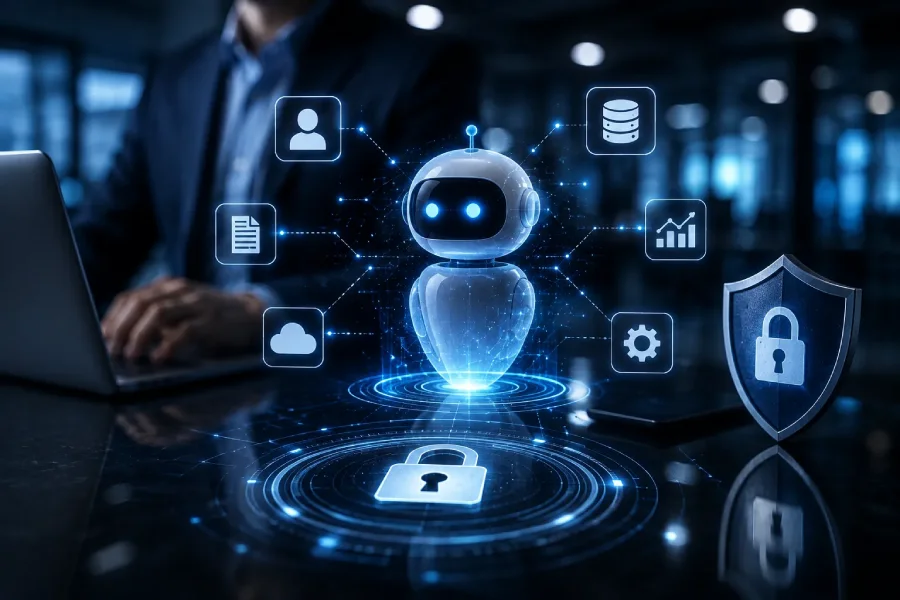
There is another reason identity is becoming even more important.
AI is gaining access to business systems.
AI assistants, automation platforms and AI agents can increasingly interact with applications, databases, APIs and business workflows.
That creates a new security question:
What identity does an AI system have, and what is it allowed to do?
An AI agent with access to customer records, financial systems or internal documents should not automatically receive the same permissions as a human administrator.
Businesses need to consider:
- What systems can the AI access?
- What information can it retrieve?
- What actions can it perform?
- Who approved those permissions?
- How are its activities logged?
- Can its access be revoked immediately?
This makes AI security and identity security increasingly connected.
The 2026 Verizon DBIR also highlights the changing threat landscape, including AI-assisted attacks, vulnerability exploitation and human-targeted social engineering.
What Should Businesses Do Now?
You don't need to replace every security system overnight.
Start by strengthening the identity layer.
Know Who Has Access
Create a clear inventory of users, administrators, service accounts, applications and other identities.
Remove Unnecessary Access
Old employee accounts, dormant accounts and excessive privileges create unnecessary risk.
Strengthen Authentication
MFA should be a foundational control, particularly for externally accessible and privileged systems.
Apply Least Privilege
Users and applications should receive only the access required to perform their role.
Monitor Identity Activity
Unusual login behaviour, privilege changes and suspicious access patterns should trigger investigation.
Secure AI and Automated Access
Treat AI agents, bots and service accounts as identities that require defined permissions, monitoring and accountability.
Cybersecurity Is Becoming a Continuous Process
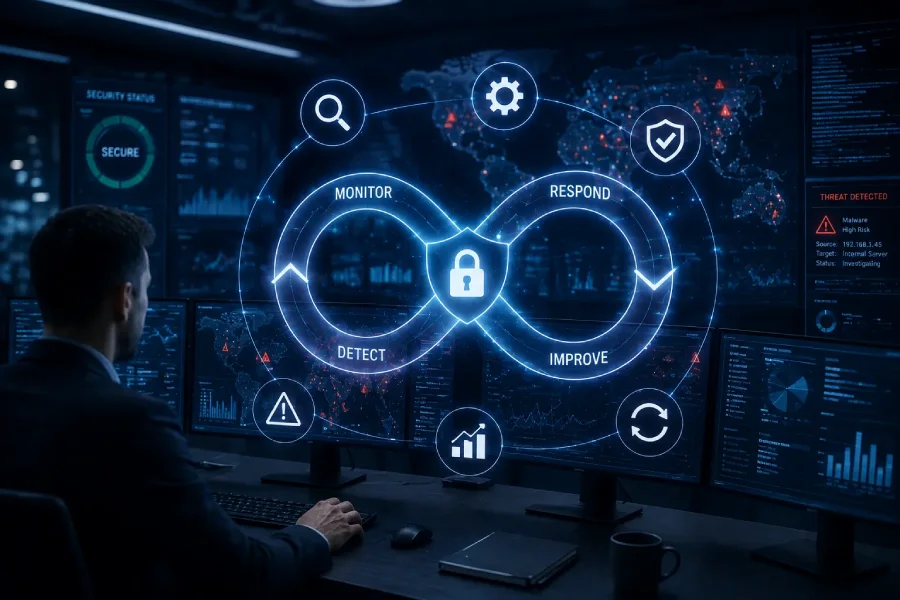
The biggest change is not simply replacing firewalls with identity systems.
It is changing the way businesses think about trust.
Modern security should not assume that someone is safe simply because they are inside the corporate network.
Every access request needs context.
Every identity needs appropriate permissions.
Every privileged account needs oversight.
And every system—including AI-enabled systems—needs to be monitored.
That is the principle behind Zero Trust: don’t automatically trust users or devices based on where they are connected.
What This Means for Your Website and Digital Platforms
Cybersecurity isn't limited to internal IT systems.
Your website is also part of your digital infrastructure.
A compromised administrator account can potentially lead to:
- Website defacement
- Malicious code injection
- Data exposure
- SEO manipulation
- Customer redirection
- Loss of business continuity
- Damage to brand credibility
This is particularly relevant for organisations whose websites are important sources of leads, customer communication and business operations.
At Nispaara Solutions, website security is treated as an ongoing requirement rather than a one-time development task. Our website maintenance approach includes security monitoring, updates, backups, performance monitoring and technical support.
The New Security Question
The cybersecurity question used to be:
“Can we keep attackers outside?”
Today, the better question is:
“Can we control exactly who—or what—gets access to what?”
That includes employees, administrators, applications, third-party services, devices and increasingly AI systems.
Firewalls still matter.
But they are no longer the whole perimeter.
Identity is becoming one of the most important security controls a modern business can have.
And as businesses become more cloud-connected, remote and AI-enabled, controlling identity and access will become even more critical.
Frequently Asked Questions
What is identity security?
Identity security is the process of protecting user, application and device identities while controlling what resources they can access and under what conditions.
Why is identity becoming more important than firewalls?
Modern businesses operate across cloud services, remote networks, applications and third-party platforms. Identity-based controls help determine who or what is requesting access rather than relying only on network location.
What is Zero Trust security?
Zero Trust is a security approach that assumes no implicit trust based on network or physical location and requires appropriate authentication and authorization before access to resources.
Is MFA enough to protect business identities?
No. MFA is an important security control, but businesses should also manage permissions, privileged access, dormant accounts, devices, access reviews and suspicious identity activity.
How does AI affect identity security?
AI agents and automated systems may need access to business applications and data. Organisations therefore need to define their identities, permissions, actions and monitoring requirements rather than treating AI access as automatically trusted.
What is the connection between identity security and website security?
Website administrators, CMS accounts, hosting accounts and third-party integrations all have access privileges. Protecting these identities can help reduce the risk of unauthorized website changes, data exposure and operational disruption.
How can a business improve identity security?
Businesses can begin by auditing accounts and permissions, enabling MFA, removing dormant accounts, applying least privilege, reviewing administrator access and monitoring unusual authentication activity.
Your network may have a perimeter. Your business no longer does.
Every user, device, application and AI system can become a potential pathway into your digital environment.
The businesses that understand this shift—and build security around identity, access and continuous verification—will be better positioned to protect their digital operations as technology becomes more connected.
Build a stronger security posture